

Dental Implants in Miami
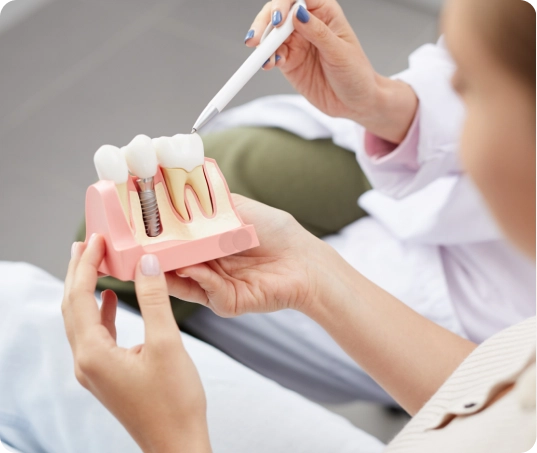
When a tooth is lost or needs to be removed, there are a few ways to replace it. For many patients at Miami One Dental, dental implants are a popular choice as they offer a stable and long-term solution that looks and functions much like a natural tooth.
As an implant dentist on the Gold Coast, we take the time to understand your situation, walk you through all available options, and help decide what works best for you. Undergoing dental implants is a lifelong commitment and not everyone is a suitable candidate. We are currently offering a complimentary consultation so you can explore your options before making any decision.
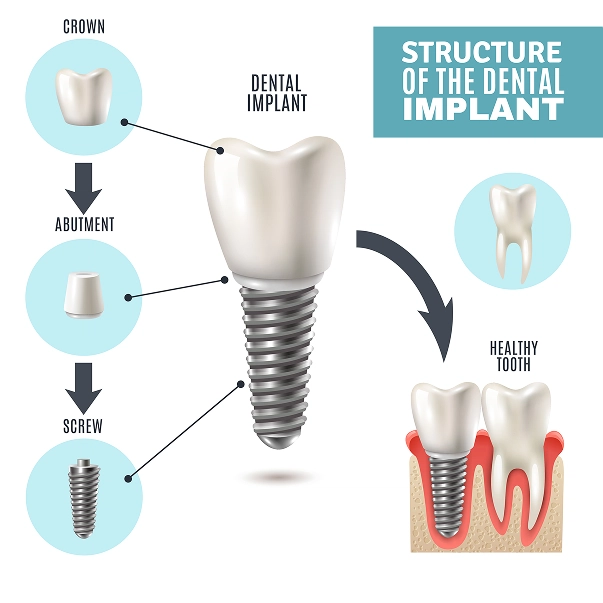
Dental Implants
A dental implant is a small titanium post surgically placed into the jawbone to act as an artificial tooth root. Once the implant integrates with the bone, a custom-made crown, bridge or denture is attached to replace the missing tooth in both appearance and function.
The dental implant procedure is well-established and has been used in dentistry for decades. Because the implant sits within the bone, it is designed to provide a stable foundation that doesn’t depend on surrounding teeth for support. It also stimulates the jawbone the way a natural tooth root does, which can help reduce or prevent the bone resorption that may occur with other replacement options.
Dental Implant Options
Single Tooth Implants
A single tooth implant is used to replace a missing tooth with an individual implant and crown. The crown is custom-made to match the shade and shape of your surrounding teeth, and the implant teeth function independently without affecting the teeth on either side. This is often the preferred approach for patients missing a single tooth who want a long-term, stable tooth replacement option.
Multiple Tooth Implants
Multiple tooth implants may be an option when two or more teeth are missing, either in a row or in different areas of the mouth. This option may also be worth discussing if you have existing teeth that are in poor condition and beyond practical repair, where extraction and implant replacement may be considered as part of a broader treatment plan. Depending on your situation, individual implants with separate crowns or an implant-supported bridge may be used. We'll assess your case and discuss the approach suited to your bone density, gum health, budget and overall goals.
Implant-Retained Dentures
For patients missing several or all of their teeth, implant-retained dentures offer a more stable alternative to conventional removable dentures. A small number of implants are placed into the jaw, and the denture clips securely onto them. This can reduce movement while eating and speaking and help patients feel more comfortable with their dentures. We’ll talk you through the options and let you know if this approach is suited to your situation.
Bone Grafting and Gum Grafting
If you've been told previously that your bone or gum tissue may not be sufficient for implant placement, grafting may still be worth exploring. Bone grafting involves adding material to the jaw to build up the area, while gum grafting can help restore soft tissue coverage. These procedures are carried out in-practice and may be recommended as a preparatory step before implant placement. We'll explain what's involved and give you a full timeline if grafting is needed.
Same-Day Implants
Same day dental implants may be an option for eligible patients where conditions allow the implant and a temporary crown to be placed in a single appointment. A temporary tooth may be placed on the day, but the final restoration is fitted after healing. This is assessed on a case-by-case basis and depends on factors like bone quality, the position of the missing tooth and overall oral health. Not all cases are suitable for same-day placement, and we’ll let you know during your consultation if this approach is right for you.
Options Compared
If you’re looking at missing teeth replacement options, the right approach depends on how many teeth are missing, the condition of your jawbone and gums and your personal preferences. Implants are one missing tooth solution, but bridges and dentures may also be appropriate. Here’s how the commonly used teeth replacement options compare.
Implants are placed directly into the jawbone and function independently of surrounding teeth and don't require the neighbouring teeth to be altered. Because they integrate with the bone, they can help prevent the resorption that may occur when a tooth root is absent. Implants do require adequate bone and gum support, and the treatment timeline is typically longer than other options, though the implant itself can last many years with good care.
A bridge replaces a missing tooth by anchoring a false tooth to the teeth on either side. It's a quicker and cost-effective option than implants and doesn't involve surgery. However, the adjacent teeth need to be permanently trimmed and shaped to fit the bridge crowns, which is an irreversible change. Bridges also require careful cleaning around the anchoring points and may need replacing every 5-15 years. They can be a suitable option for patients who have healthy teeth on either side of the gap.
Removable dentures can replace several or all teeth and are a non-surgical option typically suited to full arch replacements. They sit on the gums and are taken out for cleaning. Some patients find conventional dentures can shift during eating or speaking and over time the fit may change as the jawbone resorbs beneath them.
For patients looking for a more stable option, implant-retained dentures clip onto a small number of implants placed in the jaw. This can help reduce movement and may help preserve the underlying bone. The investment is higher than conventional dentures but lower than replacing each tooth individually. We offer both options and can help you work out what suits your situation.
Smile Transformations
The following cases are for illustration purposes only, shared with our patients’ consents. Results vary depending on oral health, existing restorations, and care between appointments. A consultation is essential to determine appropriate treatment options and understand associated risks. General information on cosmetic dental treatment risks and considerations can be found here.
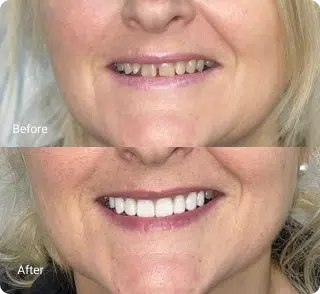
Treatment: loreum loreum
After photos taken during
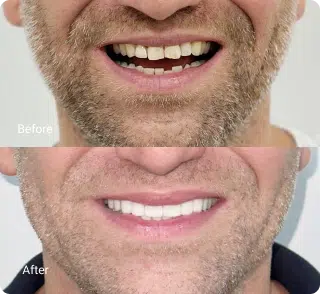
Treatment: loreum loreum
After photos taken during
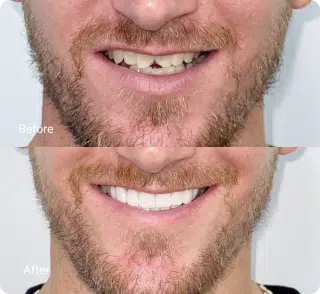
Treatment: loreum loreum
After photos taken during
Dental Implant Process
1. Complimentary Consultation & Assessment
Your first appointment is complimentary and obligation-free. We assess your teeth, jawbone and gum health, including X-rays to evaluate bone density. We'll walk you through the procedure in detail, discuss your options and provide transparent pricing across all relevant treatment approaches. There's no pressure to proceed until you feel ready.
2. Implant Planning and Placement
Dental implant surgery in Miami is carried out in-practice with oral sedation available depending on your needs and suitability. The titanium implant is placed into the jawbone. A healing period follows to allow the implant to integrate with the bone, typically taking three months though this varies between individuals.
3. Post-Operative Review
We schedule a review appointment around a week after surgery to review healing and address any concerns. These appointments act as checkpoints along the process to support your recovery and allow us to identify anything that needs attention early.
4. Maintenance and Cleaning During Integration
While the implant is integrating with the jawbone, we schedule a professional clean and maintenance visit to help reduce the risk of infection and support the healing environment. Keeping the area clean during this phase supports the healing process.
5. Shade Matching & Final Restoration
Once the implant has fully integrated, typically three months after surgery depending on bone density and healing, we take digital scans and match the shade of your restoration. The final crown, bridge or implant-retained denture is then fabricated and fitted. It's designed to match your surrounding teeth in shade, shape and function.
6. Aftercare and Follow-Up
We schedule follow-up appointments to monitor the implant and check that everything is functioning as expected. Good oral hygiene, regular check-ups and keeping up with scheduled follow-up appointments all contribute to the longevity of your implant. We'll give you clear aftercare instructions and set up a schedule that works for you.

Dental Implants Cost
Dental implant costs vary depending on a number of factors, such as the type of implant chosen and whether any additional procedures, such as bone or gum grafting, are required. During your initial consultation, after careful evaluation, we will provide a breakdown of costs for each suitable option and your payment choices.
If you have private health insurance, we can discuss the claimable amount and provide a breakdown of out-of-pocket expenses. We accept all major health funds and are a preferred provider for NIB and its participating funds, as well as Westfund. If you wish to spread the cost over manageable instalments, we also offer payment plans through Afterpay and Denticare.

Complimentary Implant Consultation
Considering implants but not sure where to start? Our complimentary consultation is designed to give you clarity. We’ll examine your teeth and jawbone, discuss what’s involved in your specific case and outline the options available to you. There’s no obligation and no pressure to proceed.
This consultation covers discussion and suitability assessment. Detailed imaging, digital scans and formal treatment planning are a separate step and may be recommended if you decide to go ahead.
Frequently Asked Questions
With good oral hygiene and regular dental check-ups, implants are designed to be a long-term solution. The implant itself can last many years, though the crown or restoration on top may need replacing over time due to normal wear. Longevity varies between individuals and depends on factors like bone health, oral hygiene, keeping up with follow up appointments and lifestyle.
Recovery from implant placement varies between individuals. Most patients can return to normal activities within a few days, though some tenderness and swelling is common in the first week. The full integration period, where the implant fuses with the jawbone, typically takes several months. We’ll give you clear aftercare instructions and set up review appointments throughout the process to ensure everything is tracking well.
Candidacy depends on factors like bone density, gum health and overall medical history. If your bone isn't sufficient, grafting may be an option to build up the area before placement. Our complimentary consultation is the most straightforward way to find out if implants may be suited to your situation, with no obligation to proceed.
Implant placement is carried out with sedation options available depending on your needs and suitability. Discomfort varies between individuals, and most post-procedure tenderness can be managed with appropriate pain relief as advised by your dentist. We’ll talk you through what to expect at every stage.
Costs depend on the number of implants, the type of restoration and any additional procedures like grafting. We provide a full cost breakdown at your consultation with no hidden fees. Payment plans through Afterpay and Denticare are available.
Dental implants are designed to be a long-term option, and with good oral hygiene and regular check-ups, the implant post itself can last many years. The crown or restoration on top may need replacing over time due to normal wear.
Dental implants are one of the most established options for replacing missing teeth. They aim to replicate the function and appearance of a natural tooth, though outcomes vary between individuals. Many patients consider implants when looking for a long-term tooth replacement option. Suitability depends on your bone density, gum health and overall oral condition.
At Miami One Dental, we offer single and multiple dental implant treatment. Visit us inside Miami One Shopping Centre, at the corner of Gold Coast Highway and Toombul Avenue. If you’re searching for dental implants near me or a local implant dentist, we offer complimentary consultations so you can find out if implants may be suited to your case. Call (07) 5576 5194 or book online.